

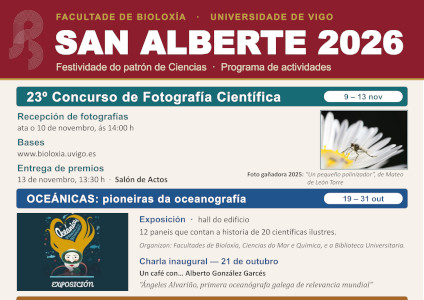
As facultades de Bioloxía, Ciencias do Mar e Química celebran esta semana a festividade do seu patrón, San Alberte, e fano cun amplo programa de actividades aberto á participación de toda a comunidade universitaria. Ao longo de toda a semana o edificio de Ciencias Experimentais, que acolle os tres centros, convértese nunha particular sala de exposicións e auditorio con charlas de distintos especialistas sobre temas de actualidade.
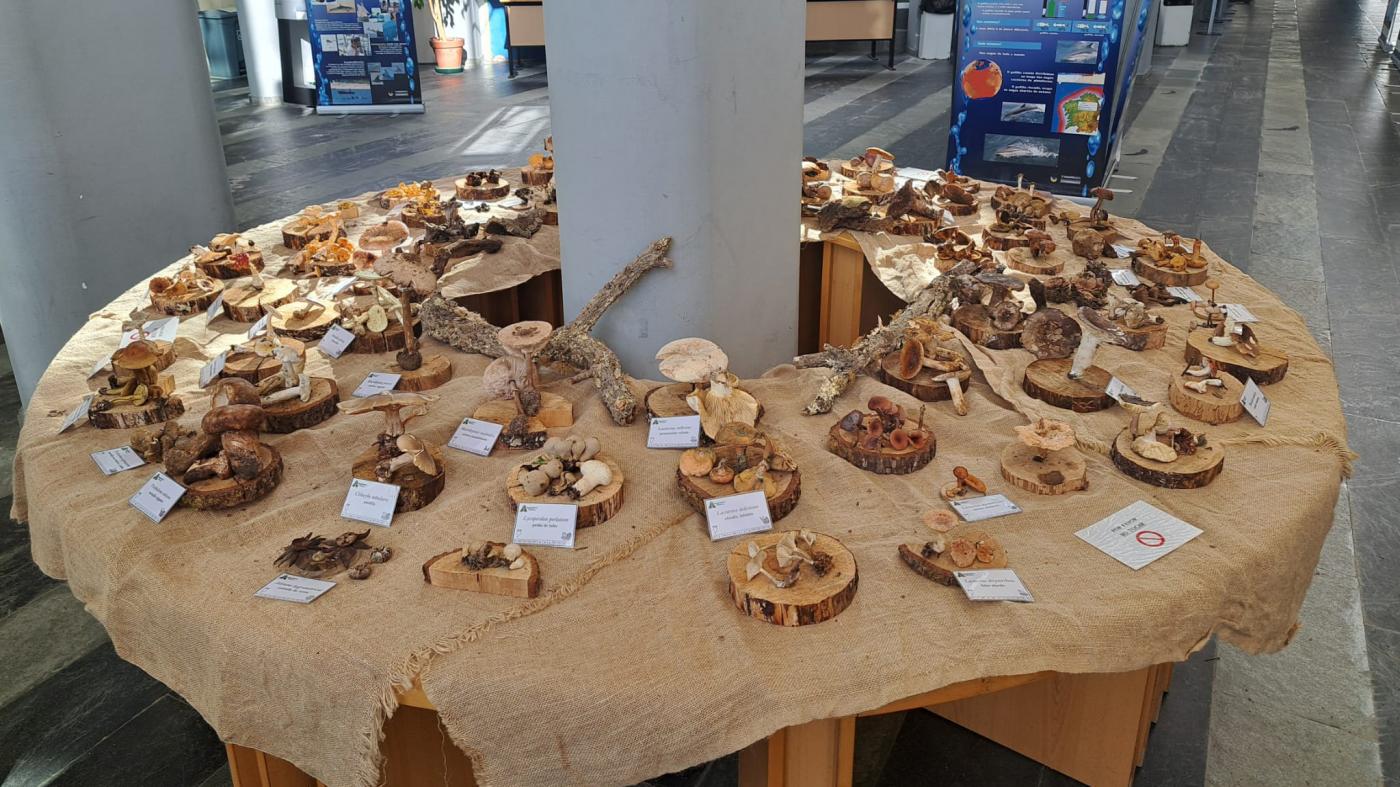
As actividades arrancaron onte luns coa xa tradicional exposición de cogomelos, organizada pola spin-off da UVigo MycoGalicia Plantae, no vestíbulo principal do edificio, á que este ano se suma unha nova alternativa, a mostra itinerante Golfiños na proa, organizada con material cedido pola Coordinadora para o Estudo dos Mamíferos Mariños, Cemma, exposto tanto no vestíbulo como no salón de actos. Inclúense 12 paneis explicativos dos mamíferos mariños, nos que se trata de responder a múltiples preguntas -De que se alimentan as baleas? E os cachalotes? Onde teñen o seu hábitat natural as toniñas e os arroaces?, etc.- e diferentes pezas, desde unha costela cunha balea común ata o cranio dunha toniña ibérica, dun golfiño común ou dunha tartaruga de coiro.


 Master in Aquaculture
 Master in Marine Biology
 Master in Advanced Biotechnology
 Master in Neuroscience
 Master in Terrestrial Biodiversity
 Master in Genomics and Genetics
 Master in Teaching Training